• 35 posts
  • 0 comments
Joined 11 months ago
Cake day: November 17th, 2025
  • A drone strike sank the Turkish-owned grain carrier Royad Mammadov in Romania’s exclusive economic zone on October 5, killing two crew members, including the captain.
  • Ukraine attributed the attack to two Russian drones, while Romania has not named a suspect and Russia did not mention the vessel.
  • Romania called for an immediate moratorium on attacks against merchant ships in the Black Sea grain corridor.

…

A drone strike sank a Turkish-owned cargo ship carrying Ukrainian corn in Romania’s exclusive economic zone on Monday, killing two crew members, including the captain and setting off a rescue that pulled 11 survivors from the Black Sea.

Romanian authorities identified the vessel as the Royad Mammadov and said the strike occurred roughly 20 nautical miles off the coast, near the Pescăruș offshore energy platform. Ukrainian President Volodymyr Zelensky attributed the attack to two Russian drones. Romanian officials have not named a suspect. The ship was carrying corn from Ukraine to Italy.

…

Removepaywall.com

…

According to the regional branch of Russia’s Investigative Committee, the man killed his partner on October 3 during a conflict in the village of Neklyudovo, striking her in the head several times with a tire iron. He then drove to Nizhny Novgorod and told the woman’s mother and daughter what had happened. They were planning to go to the police, so he killed them as well.

The man then dismembered the bodies, placed the remains in bags, and rented a van to transport them into the woods. Traffic police stopped the van for an inspection en route. “Suitcases, backpacks, bags, and totes were found in the back. The driver explained that these were his passenger’s personal belongings. The passenger got nervous and then suddenly ran from the police officers, but was detained,” said Internal Affairs Ministry spokesperson Irina Volk.

According to the Telegram channel 112, the victims were ages 47, 77, and 18.

…

Archived

…

Spain recorded the largest increase: the number of Russians holding residence permits there rose by 44,000, or 61%, over four years. Cyprus ranked second (up 27,000), followed by France (up 14,000).

In some EU countries, however, the number of Russian citizens with temporary or permanent residency fell. The largest declines were in Latvia (down 15,000), Estonia (down 9,000), and Czechia (down 8,000).

Eurostat data indicate that the number of Russians who had settled in the EU rose sharply in 2022 and 2023, then remained largely stable.

…

Meanwhile in Armenia, which has long been one of the easiest places for Russians to relocate, new residency rules are about to make staying there more complicated,

Starting November 1, new rules for obtaining a residence permit will take effect in the republic. The authorities are introducing quotas on residence permits, moving document submission online, and for the first time setting clear financial requirements for foreign entrepreneurs.

Archived

Denmark has confirmed a major data breach involving its Central Population Register, known as CPR, after unauthorized parties accessed personal records belonging to about 8.8 million people. The exposed information includes names, addresses, and CPR numbers, according to an official statement published on October 5, 2026.

The figure exceeds Denmark’s population of roughly six million because the register also holds records of people who have moved abroad and those who have died. Officials said the CPR system currently contains approximately 11 million registered people, meaning the incident affected a large share of its records.

…

The attackers misused a private Danish company’s lawful access to search the CPR system during September. Authorities have not described how the unauthorized parties obtained or used that access, leaving the initial entry method unknown.

The confirmed route is important: this was misuse of an approved company connection, not a publicly confirmed software flaw in the register. The ministry has not disclosed the company’s name, linked the incident to a known threat group, or identified a specific vulnerability.

…

Research, Education and Digitalization Minister Christina Egelund described the incident as deeply serious. She informed Parliament’s Business and Digitalization Committee and requested a thorough security review of CPR. Officials said preventive measures had already started, without detailing their technical scope.

…

Names, addresses, and national identification numbers can make fraudulent messages and calls appear convincing. Cybersecurity News’ coverage of the Pentagon data breach similarly highlights the risks when personal records include identity numbers, while its phishing prevention guidance explains common warning signs.

…

Archived

High-tech goods from China, such as electric vehicles or even robot vacuum cleaners, could represent a security risk, Germany’s BfV domestic intelligence agency has warned.

BfV head Sinan Selen told a hearing of parliament’s intelligence oversight committee in Berlin that the issue was of “great concern” to him.

“I already see substantial shortcomings that create potential for abuse,” he said.

Data collected via the products could be passed on to “state agencies”, he said, leading to risks including “potential shutdown of entire products.”

“In terms of resilience and availability (this) could confront us with problems,” he said.

The warning comes as sales of high-tech products to Germany are growing and Chinese manufacturers compete ever more strongly with their German counterparts.

…

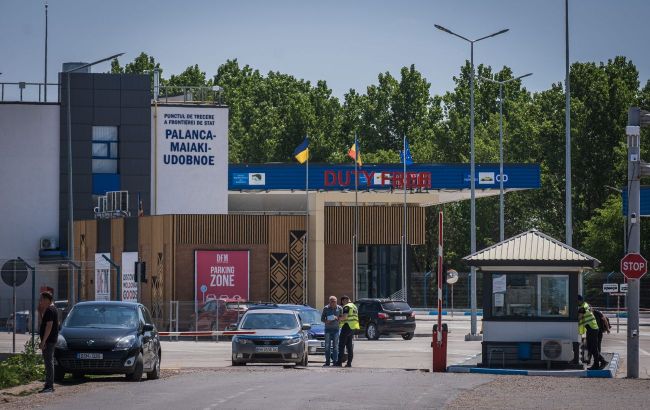
Russia struck a passenger bus near the Palanca border crossing between Ukraine and Moldova, according to Moldovan police.

A border guard was injured. A bus and a checkpoint booth were also damaged.

Moldovan officials note that the incident occurred as a result of Russian attacks on Ukrainian infrastructure. The checkpoint is currently closed.

…

On the morning of October 3, the Moldovan Ministry of Defense reported that three missiles and two drones had exploded on the country’s territory.

In addition, another object flew over Moldovan airspace within a minute, heading toward Palanca.

On October 3, passengers were evacuated again from Chisinau Airport due to a bomb threat.

…

Archived

Five Russian drones, including unmanned weapons of the “Banderol” type, crashed in Moldova on the morning of October 3, the Institute for the Study of War listed.

Moldovan President Maia Sandu announced that five Russian “air weapons”, including unmanned weapons of the “Banderol” type, violated Moldovan airspace and crashed in the country.

In recent months, Russian drones and drone debris have increasingly violated Moldovan airspace, with between February 2022 and July 2026 at least 20 violations, and seven since August 2026 alone.

…

The [Russian] aggressor intends to continue to strike Ukraine’s civilian and critical infrastructure, especially in major cities, with the aim of provoking a political crisis in Kiev in the winter of 2026-2027 and undermining Ukraine’s ability to sustain its successes on the battlefield.

Sergei “Flash”, Ukrainian presidential adviser on defense technologies Beskrestnov reported on October 3 that Russian forces used one or more mesh network repeaters, which provide a temporary local connection through which Russian drone operators can adjust the trajectory of drones during strikes on bridges in the city of Kiev.

Russian drones kill two civilians at a border crossing between Ukraine and Moldova.

…

In a separate report, The Kyiv Independent says that drones invaded Moldova’s airspace three separate times on Sept. 30, as Russia launched a day-long attack against Ukraine overnight and into the following afternoon.

… On Sept. 24, suspected Russian drones crashed in Romania and Moldova overnight, amid a sustained mass drone and missile attack on Ukraine.

On Aug. 16, NATO fighter jets shot down a suspected Russian drone that violated Romanian airspace near the Moldovan border, Romanian Defense Minister Radu Miruta confirmed.

A day later, on Aug. 17, a Russian S-8000 Banderol cruise missile entered Moldovan airspace during a Russian attack on Odesa, before crashing in a cornfield approximately 3 kilometers (1.8 miles) outside of the village of Talmaz, in the Stefan Voda district of Moldova …

Archived

cross-posted from: https://scribe.disroot.org/post/11690348

Canadian farmer Arend Feenstra, who moved to Russia through a streamlined immigration program for citizens of “unfriendly” countries who share “traditional values,” has complained that he cannot get a permanent residence permit. The news outlet Nizhny Novgorod Onlain drew attention to his YouTube video.

Feenstra received a three-year temporary residence permit in Russia’s Nizhny Novgorod region in early 2025. He then brought his wife and eight children to Russia and began farming.

But Feenstra has now learned that to replace his temporary residence permit with a permanent one, he must sign a contract with Russia’s Defense Ministry.

“I didn’t come here to sign a contract […] I have eight young children […] I’d rather take my chances in Canada, though I think living there is risky too,” Feenstra said.

…

He also said his family no longer recommends that other foreigners move to Russia because the authorities keep changing the rules and “there’s no way forward.”

Archived

cross-posted from: https://scribe.disroot.org/post/11689879

[Op-ed by former Russian diplomat Sergei Konyashin, translated from a piece published in Russian by The Moscow Times).

…

Moscow is delaying the appointment of a new ambassador to the UK after recalling the moderate career diplomat Andrei Kelin this summer. For now, this changes little: amid the collapse of relations with the West, Russian diplomacy in London has already been reduced to a shell of its former self. The more troubling question is what comes next, writes former Russian diplomat Sergei Konyashin.

…

London now appears to be serving as a testing ground for a model of controlled escalation – controlled in Putin’s view – with the “West.” If the threats against UK facilities materialize or another Leipzig-style attack occurs and the UK directly accuses Russia of being involved, Moscow will formally announce a downgrade in diplomatic relations like in the case of Estonia, forcing London to respond in kind.

…

At the same time, it is clear that the European wing of the Russian Foreign Ministry …has been exhausted as a reserve of diplomats for developing relations with the West. Future ambassadors there – as in many other parts of the world, it seems – will now be people with stronger formal and informal ties to other Russian government agencies. For that reason, the ambassador’s chair now standing vacant in London may not yet be the bleakest symbol of the Kremlin’s relations with the UK and the developed democratic world. The worst, I am certain, is yet to come.

…

Archived

…

On September 10, it was reported that a joint operation between the UK, US and Norway earlier in 2026 successfully disrupted Russian vessels simulating the deployment of a weapon designed to disable undersea cables near the remote Norwegian archipelago of Svalbard.

Russia has also deployed an underwater surveillance network in recent years made up of cables, sensors and sonar to detect Nato submarines in Arctic waters. The Northern Fleet, which is responsible for Russia’s nuclear defence, is based on the Kola Peninsula near the border with Norway.

At the same time, Russia’s state-controlled energy company Rosneft has pushed forward with its Vostok Oil project, a vast Arctic development through which Moscow aims to boost oil production. Russia recently began exporting oil from the project commercially.

Much of Russia’s oil is exported by its shadow fleet, a network of sanctioned tankers that operate from the Russian Arctic. The fleet has expanded rapidly since 2022, with some of its vessels suspected of engaging in spying and sabotage in European waters.

…

The Finnish prime minister, Petteri Orpo, told the dignitaries gathered in Rovaniemi that “Russia is the most significant threat” to the European Arctic. He added that there was a high demand for “concrete action from the EU”. But what form should this action take?

…

There are two main priority areas. First, Europe needs to boost its capacity to monitor and react to Russian activities in the Arctic. Intelligence gathering, surveillance and reconnaissance remain a key challenge in the high north, primarily due to the existence of satellite communication gaps at high latitudes.

…

The second priority is to bolster the physical presence of EU states in the Arctic. Third-party Nato states such as the UK already work closely with Iceland and Norway, two of the EU’s key Arctic partners. There are 1,500 Royal Marines stationed at Camp Viking in northern Norway alone.

…

Protecting Europe against Russian threats is perhaps the core driver of the desire to strengthen the EU’s Arctic presence. But EU leadership also recognise that the Arctic is undergoing environmental change. This change will inevitably necessitate more activity in the region, beyond mere deterrence.

…

Archived

[Original in Polish. This is a paraphrased automated translation with minimal edits.]

…

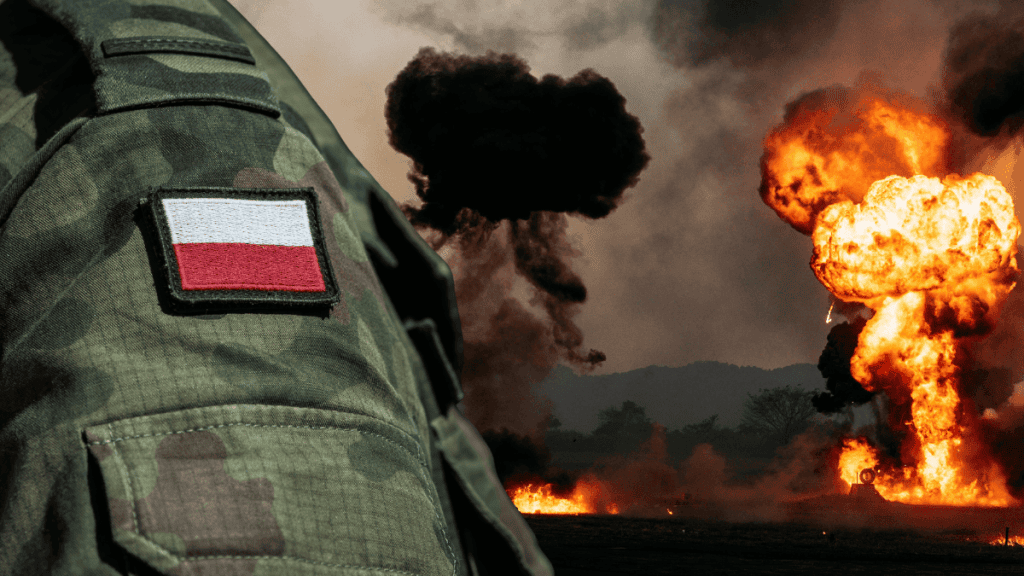
Poland’s Ministry of National Defence is working on the introduction of “a state of full state readiness for war,” according to Maciej Samsonowicz, an advisor to the Polish Minister of Defense.

"I don’t want to go into details. A state of full state readiness for war – that is what it is called in the project”, said Samsonowicz.

…

Regulations are to be prepared without undue delay, but details will only be provided once the arrangements have been concluded, he said.

The aim is to “preparing the military, infrastructure and transport system for the conflict before the formal declaration of martial law.”

The new legal structure would fill the gap between the functioning of the state during peace and the formal introduction of martial law. It is primarily about the possibility of earlier launching procedures related to the spread of troops, the preparation of infrastructure and the adoption of allied forces.

…

According to Samsonowicz, the work is already advanced. One of the most important areas is to organize the competences associated with the movement of troops. In the event of a rapid increase in the threat, the Armed Forces should be given more opportunities to manage the movement of military columns and coordinate transports even before the conflict begins.

…

The new regulations will also affect the implementation of defense infrastructure projects—the construction of roads, rail lines, ports, airports, fuel depots, pipelines, and logistics terminals necessary for receiving and supporting NATO forces. “We cannot wait a year and a half—or two or three years under normal circumstances—to build anything,” Samsonowicz emphasized. According to him, the changes should streamline administrative and environmental procedures, which currently have the potential to delay the implementation of projects critical to security for years.

…

Archived

Moldovan President Maia Sandu warned Friday that Russia will remain a major source of instability in Europe long after the war in Ukraine ends, regardless of whether Russian President Vladimir Putin remains in power, urging Europe to strengthen militarily, accelerate EU enlargement and treat Ukraine as a central pillar of the continent’s future security.

Speaking alongside Finnish President Alexander Stubb at the fifth annual Helsinki Security Forum, Sandu described Moldova’s experience confronting Russian hybrid warfare – from political financing and voter bribery to cyberattacks, disinformation, energy pressure and repeated violations of Moldovan airspace.

“Moldova enjoys peace today thanks to the courage of the Ukrainian people, of the Ukrainian leadership, and thanks to the support that you and many other friends of Ukraine have been providing,” Sandu told the forum.

…

Archived

cross-posted from: https://scribe.disroot.org/post/11654572

During the current pre-election period, the State Security Service (VDD) is keeping a close eye on “what is happening in society and the information space” in order to prevent attempts to illegally influence the course and results of the 15th Saeima elections, it said on September 28th.

“During the elections, the VDD, in cooperation with the State Police and other state and local government institutions, will implement enhanced security measures to ensure free and fair elections,” the VDD said.

The competence of the VDD is to identify and prevent attempts by both foreign and Latvian nationals to illegally influence the conduct and results of elections.

“In the opinion of the VDD, Russia may potentially intensify disinformation campaigns against political forces and parliamentary candidates who strongly oppose Russian aggression and support Ukraine in order to influence public opinion and election results in the Latvian information space …,” said a VDD release.

…

The VDD also asked the public to provide information on detected cases of the production or dissemination of deliberately false discrediting information about a political party or candidate for deputy using ‘deepfake’ technology.

Information about possible violations can be sent to the e-mail address [email protected] by calling the 24-hour telephone number 67208964. The VDD guarantees the confidentiality of the information provider.

It will also be interesting to see how ready popular social networks such as X, Facebook and TikTok are over coming days to run misleading, scaremongering or propagandistic advertisements – though this was not mentioned by the VDD in their release.

The State Security Service (VDD) is one of the three Latvian Security and Intelligence Services, the others being the Constitution Protection Bureau (SAB) and the Defence Intelligence and Security Service (MIDD).

…

Latvia’s staunchly pro-Ukraine Prime Minister Andris Kulbergs is likely to retain power after Saturday’s national election, as many voters ​grow wary of potential Russian aggression amid airspace incursions that brought down the previous coalition.

Kulbergs, 47, a former racing driver, came to power in May after ‌a previous coalition crumbled over its handling of incidents in which stray military drones flew undetected into Latvia. Though the drones were Ukrainian, officials have blamed Russia for causing them to divert from their flight paths.

…

Archived

cross-posted from: https://scribe.disroot.org/post/11654227

Lithuania’s government on Wednesday approved a draft legislation banning Russian and Belarusian nationals from purchasing property in areas located near strategic sites, even if they hold residence permits.

Belarusian nationals without residence permits would also be barred from buying property, while Russians were banned from doing so in a previous bill.

The restrictions would not apply where ownership is acquired through inheritance. ​ If approved by the Seimas, the amendments would come into force on January 1 next year.

Latvia and Finland previosuly banned Belarusian and Russian nationals from purchasing property, with exceptions for those who hold residence permits in the respective countries. Estonia is now planning to introduce a similar ban.

…

Archived

cross-posted from: https://scribe.disroot.org/post/11653863

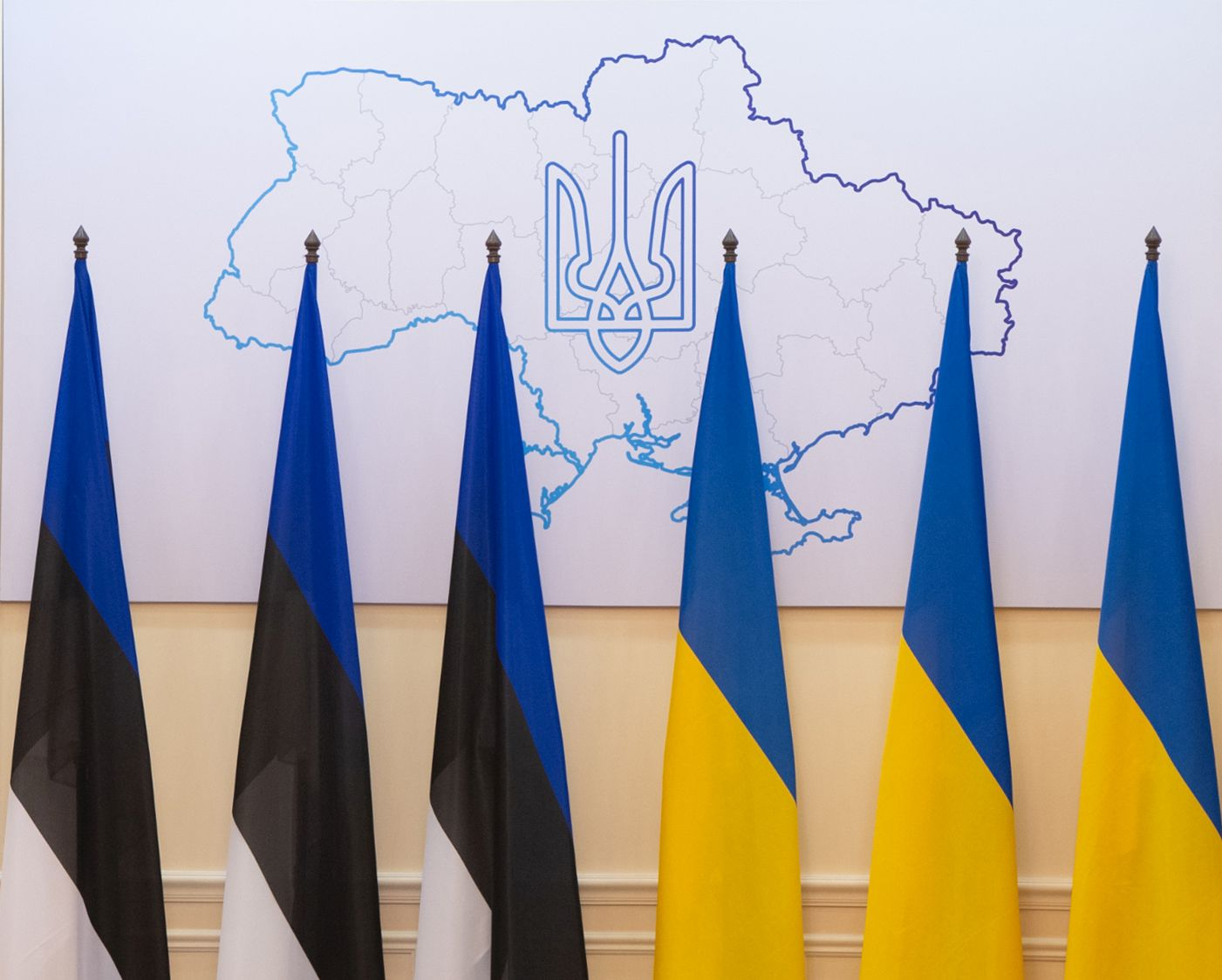
The Riigikogu (Parliament of Estonia) adopted a Statement to confirm Estonia’s unwavering support to the victory of Ukraine in Russia’s war of aggression … It says that Ukraine’s victory and strategic defeat of Russia are necessary preconditions for ensuring a lasting and fair peace and security in Europe.

The Riigikogu calls on the allies and partners to prioritise the delivery of air defence systems and missiles to Ukraine in the conditions of the approaching winter and Russia’s increasing terror in the sky, and emphasises that Ukraine’s defence industry basis needs to be supported and the economic capability of the country ensured through long-term financial aid.

In the Statement, countries are called to ensure the critical stocks for Ukraine for the coming winter. The Statement also supports increasing economic pressure against Russia, more efficient application of sanctions, and the prosecution of violators.

…

In the Statement, the Riigikogu reaffirms its support for Ukraine’s accession to NATO and the European Union, also highlighting political unity, democracy, rule of law, human rights, and the continuation of the necessary reforms in the country.

…

The Riigikogu calls for the completion of the establishment of the special international tribunal for the crime of aggression and compensation mechanisms for aggression, and underlines that a lasting peace in Europe cannot be born out of rewarding the aggression or restoring the spheres of influence. “A fair and lasting peace requires the preservation of Ukraine’s sovereignty and territorial integrity as well as reliable security guarantees that prevent any new aggressions from the part of the Russian Federation,” the Statement says.

…

Archived

The Riigikogu (Parliament of Estonia) adopted a Statement to confirm Estonia’s unwavering support to the victory of Ukraine in Russia’s war of aggression … It says that Ukraine’s victory and strategic defeat of Russia are necessary preconditions for ensuring a lasting and fair peace and security in Europe.

The Riigikogu calls on the allies and partners to prioritise the delivery of air defence systems and missiles to Ukraine in the conditions of the approaching winter and Russia’s increasing terror in the sky, and emphasises that Ukraine’s defence industry basis needs to be supported and the economic capability of the country ensured through long-term financial aid.

In the Statement, countries are called to ensure the critical stocks for Ukraine for the coming winter. The Statement also supports increasing economic pressure against Russia, more efficient application of sanctions, and the prosecution of violators.

…

In the Statement, the Riigikogu reaffirms its support for Ukraine’s accession to NATO and the European Union, also highlighting political unity, democracy, rule of law, human rights, and the continuation of the necessary reforms in the country.

…

The Riigikogu calls for the completion of the establishment of the special international tribunal for the crime of aggression and compensation mechanisms for aggression, and underlines that a lasting peace in Europe cannot be born out of rewarding the aggression or restoring the spheres of influence. “A fair and lasting peace requires the preservation of Ukraine’s sovereignty and territorial integrity as well as reliable security guarantees that prevent any new aggressions from the part of the Russian Federation,” the Statement says.

…

Archived

Former German Chancellor Gerhard Schröder has joined the supervisory board of Giperglobus LLC, which operates the Globus hypermarket chain in Russia.

…

Hyperglobus was spun ​off from Germany’s Globus Holding in 2025 and is now fully independent, according to Globus.

…

Giperglobus owner Thomas Bruch said Schröder’s appointment would let the company draw on his many years of experience in Russian political and economic affairs. He said the former chancellor would help the company maintain an “approach focused on dialogue” and find constructive solutions under current conditions.

…

Globus remains one of the few foreign retailers that continued operating in Russia after Russia’s full-scale invasion of Ukraine began, RBC reported. Giperglobus LLC now finances its operations with its own funds and has shareholders and a brand in common with the German chain. Giperglobus owns 22 stores in eight regions.

…

After the invasion began, Schröder maintained his relationship with Putin and continued visiting Russia. In July 2022, he met with Putin in Moscow and said a rift between them was impossible. In May 2026, Putin called Schröder his “preferred” mediator for negotiations between Russia and Ukraine, but Europe refused to let Moscow choose its representative. In June 2026, the Kremlin again said the two had met, but gave no details of their conversation.

…

Archived

At the Human Rights Council’s 63rd session (HRC63), Hong Kong human rights defenders Carmen Lau and Anna Kwok brought their testimony of transnational repression before the Council, as States renewed scrutiny of China’s human rights record.

…

During the Human Rights Council’s 63rd session (HRC63), States continued to press China to act on recommendations already made by the UN. Four years after the UN Human Rights Office published its report finding possible crimes against humanity in the Uyghur region, France, the United Kingdom and Canada again called for follow-up, amid continuing calls for the High Commissioner to provide a substantive update on China’s implementation of the Office’s recommendations. The EU, in a statement joined by Albania, Montenegro and Liechtenstein, also called for implementation of recommendations from the UN Human Rights Office and other UN human rights mechanisms, as did the Netherlands, Czechia and Sweden.

“Four years after the UN Human Rights Office concluded that serious violations in the Uyghur region may constitute crimes against humanity, the lack of substantive public follow-up is no longer tenable,” says Lee Chung Lun, programme officer at the International Service for Human Rights (ISHR).

…

As High Commissioner Volker Türk appealed for an ‘urgent U-turn’ on tightening restrictions on the rights of Tibetans and expressed deep concern at detention facilities and violations in the Uyghur region, China’s new Law on Promoting Ethnic Unity and Progress emerged as another significant focus of scrutiny for governments. Australia, Canada, the United Kingdom, the EU, Switzerland, the Netherlands, Ireland and Germany raised concerns about its potential impact on cultural, linguistic and religious rights, particularly for Tibetans, Uyghurs and Mongols.

…

China remains at heart of UN debates on reprisals and transnational repression

In the latest Secretary-General’s annual report on reprisals, China’s cross-border targeting of activists continued to draw concern. During the Council’s debate over the Secretary-General’s reprisals report, Liechtenstein raised specific concern over the cases of Anna Kwok and Carmen Lau, while the United Kingdom also highlighted Lau’s situation. Norway separately identified China among States where journalists in exile have reportedly faced patterns of transnational repression.

…

Exiled Hong Kong human rights defender Carmen Lau addressed the Council about the risks she continues to face as a result of her human rights advocacy. Lau is among the exiled Hong Kong activists subject to arrest warrants and HK$1 million bounties imposed by Hong Kong authorities.

She told the Council that repression had followed her to the United Kingdom, where her neighbours received letters containing sexually explicit AI-generated deepfakes of her and urging them to hand her over to the Chinese embassy. She also described constant online harassment and rape threats intended to intimidate and silence her.

…

Hong Kong human rights defender Anna Kwok addressed the Council during its annual dialogue on the UN Secretary-General’s report on reprisals. Kwok, who is also subject to a HK$1 million bounty, spoke about the imprisonment of her 70-year-old father in Hong Kong, which she characterised as retaliation aimed at her work abroad.

Kwok also pointed to a landmark joint statement on transnational repression by over 130 UN human rights experts issued a day earlier. The statement provides a roadmap for action, calling on States to prevent and investigate transnational repression, hold perpetrators accountable, strengthen protection for people at risk, and prevent the misuse of international law enforcement and other cross-border mechanisms.

…

Archived

[Original in Polish. This is a paraphrased automated translation with minimal edits.]

…

The procedures in force in the room that provide for visual identification of the object before it is shot down are to be replaced by the so-called positive identification.

What is positive identification?

After changing the procedures, the pilot or his commander will be able to decide to shoot down a foreign object on the basis of information collected by radars and other systems or information provided by the Ukrainian side, which regularly faces raids of Russian drones and missiles.

…

Deputy Prime Minister Władysław Kosiniak-Kamysz informed on Wednesday that new military procedures on simpler rules for identifying and shooting down foreign objects in the Polish airspace are ready. - 1 October is always a good time for implementing procedures - he added.

…

Archived

cross-posted from: https://scribe.disroot.org/post/11634461

  • On September 24, the European Union sanctioned Xenia Fedorova, the Russian former head of the French arm of Russia Today (RT) and media commentator for the Bolloré group for her role in engaging in foreign information manipulation and interference (FIMI). It follows a French expulsion order against the Russian propagandist in July 2026.

  • Accused of spreading Kremlin propaganda, she counterattacks by presenting herself as the victim of “single-minded thinking” spread by mainstream media in Western countries.

  • In doing so, she exploits a clever rhetorical and cognitive mechanism: rather than trying to convince us, the aim is to turn our own aspiration to critical thinking against “official” sources, to push Russian propaganda.

…

This process is not improvised, nor is it simply a matter of Fedorova’s personal skill. It exploits a mechanism well documented by cognitive science: epistemic vigilance.

According to the work of Dan Sperber, Hugo Mercier, and their colleagues, humans possess intuitive capacities to assess not only the content of a message, but also the reliability of its source – particularly its capacity, willingness and interest in deceiving us. The more powerful a source appears, the more it seems positioned to manipulate us and capable of harming us should it try to deceive us. As a result, the more powerful a source – for instance because it is governmental – the more this informational filter is likely to be triggered, especially in the minds of citizens with low trust in political institutions.

…

Epistemic vigilance is a generally healthy reflex: it keeps us from believing just anyone at their word and from being exploited.

…

But this vigilance mechanism can be hijacked, exploited for ends contrary to individuals’ interest in knowing the truth. By labelling the true Western narrative on Ukraine as “single-minded thinking” in order to discredit it, Fedorova activates this aspiration to critical, independent thinking among a public that has legitimately been burned by real precedents of lies or contradictions in governmental discourse. Among these lies and contradictions, one can cite the lies of the G.W. Bush administration regarding supposed Iraqi weapons of mass destruction in 2003, but also France’s contaminated blood scandal, the signing of the Lisbon Treaty despite the “no” vote on the European Constitution project, or the inconsistencies of Emmanuel Macron and his government regarding the effectiveness of masks during the COVID-19 pandemic.

…

This is not an isolated invention. Political communication specialist Ilya Yablokov showed, as early as 2015 in the journal Politics, that RT builds a significant part of its editorial strategy on mobilising conspiracy theories aimed precisely at delegitimising Western narratives by portraying them as instruments of a hidden power, all while presenting Russian positions as the authentic voice escaping this control.

…

The paradox of this type of conspiratorial discourse is that scepticism, supposedly meant to protect us, ends up turning against the institutions – professional academics, investigative journalists, ministries of European democracies – which, despite their imperfections, remain the best equipped to establish facts, thanks to collective editorial and methodological procedures.

Trust is then redirected towards far less verified and regulated sources, such as the official discourse of the Russian state, which has no internal counterbalancing power, on the grounds that these are “non-dominant”, “unofficial” voices – an appeal that seduces minds with low political trust and a desire for independence.

…

Archived