Please contact me at @[email protected] for any urgent issues.

This is an alt account used for testing and scheduling posts. I have retired the previous accounts I used for this purpose ( [email protected] and [email protected] )

profile image: Photo by Kedar Gadge

  • 7 posts
  • 0 comments
Joined 8 months ago
Cake day: February 15th, 2026

Please consider sharing these resources with local libraries, seniors programs, and maybe even go through them with a family member. Or better yet, take a look at it and give them helpful feedback. I’m sure there are ways that it could be improved :)

For reference, CIRA is the Canadian Internet Registration Authority, the org that manages the .ca country code TLD. They have grants for projects and run programs to make the internet better for people.

The link: https://cyberseniors.org/cybersecurity/

Description from the article

For many older adults, cybersecurity threats are far from abstract. In real life, they show up as fake banking messages, phishing emails, tech support fraud or scam calls that can leave people feeling overwhelmed, confused, embarrassed and alone.

These challenges can be especially hard to navigate in smaller, rural areas where local supports are limited and isolation means trusted help is not always close at hand.

Cyber-Seniors recognized that many older adults in these communities need cybersecurity support that feels easy to access and free of judgement. The non-profit organization also understood the shame many seniors feel when they make mistakes or have limited tech knowledge.

“There’s absolutely fear of embarrassment associated with being targeted with a scam or being scammed,” explains Lukas Holland, business development manager for Cyber-Seniors.

Rather than continuing to fold the topic into broader digital literacy programming, Cyber-Seniors decided to build “a dedicated cybersecurity package” with 12 video lessons, handouts, worksheets, a public online resource hub and ‘train-the-trainer’ materials that can be used by librarians, volunteers, caregivers and community organizations supporting seniors locally.

From the newsletter:

We’ve recently released tailcat, a remix of pieces of Tailscale that gives you a way to use the open-source Tailscale data plane without the Tailscale control plane, written by the people who made Tailscale.

Specifically, tailcat is both an open-source Go package and a CLI tool using that package. It lets you run a server-side listener and a client to connect to that server, moving bidirectional bytes back and forth.

Potential usage info from the website link - https://tailscale.com/tailcat:

Setting up a tailnet makes sense when you need governable access, identity, and policy. Sometimes you don’t. You might need to SSH into a development environment for an hour. Give an agent access to a test machine for one task. Connect a game session. Move a file between two machines. Tailcat gives you a secure connection without requiring either side to become part of a larger network.

A technical explanation from the github:

Tailcat is a remix of Tailscale open source pieces to act like netcat, but over Tailscale’s data plane, without Tailscale’s control plane. Tailscale’s data plane (magicsock, internally) gives you point-to-point WireGuard®-encrypted tunnels between two machines with DERP as the NAT-hole-punching communication side channel and the ultimate relay-of-last-resort if NAT traversal fails. Instead of using the Tailscale control plane, all tailcat connection metadata is exchanged out of band, however you want.

License: BSD 3-Clause License

The latest versions of Common Voice datasets, Scripted Speech v27.0 and Spontaneous Speech v5.0, are available for download on the Mozilla Data Collective! A giant thank you to all of our contributors for their hard work putting together these datasets.

What’s new in this release:

Version 27.0 of Scripted Speech includes datasets for 295 languages. These datasets contain 32,349,999 voice clips, making approximately 42,593 hours of speech data available for developing and improving speech technology.
Version 5.0 of Spontaneous Speech includes datasets in 80 languages. These datasets contain 89,754 voice clips of free-form answers to questions, of which 302 hours have been transcribed and validated.

Since the last release, the Common Voice community has welcomed 1 language to Scripted Speech - Pa’O (blk) - and 6 languages to Spontaneous Speech - Chinese (China, zh-CN), Swahili (sw), Palauan (pau), Sundanese (su), Bengali (bn) and Shan (shn).

This feels like bad design

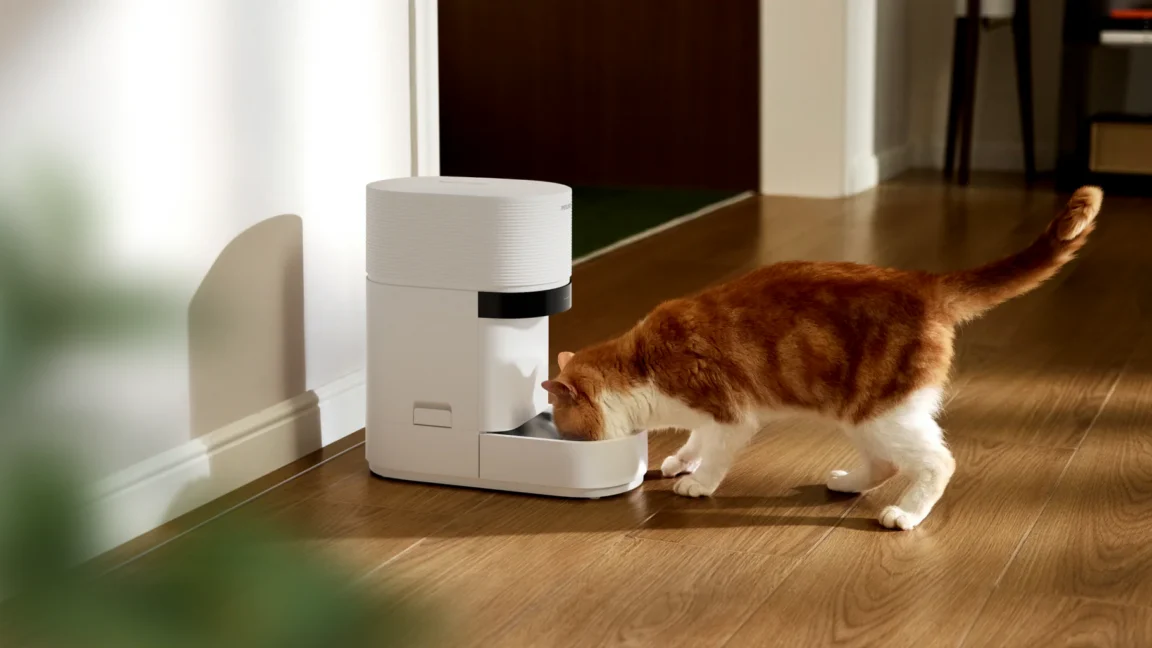
Smart pet-feeder company Petlibro suffered an outage on Tuesday, giving users a harsh reminder of the risks of relying on smart devices.

Petlibro makes pet feeders that connect to Wi-Fi and, for setup with Petlibro’s mobile companion app, Bluetooth. Users can set the feeders to automatically dispense food at scheduled times, which is handy for pet care when the owner is out of the home.

In a statement to The Verge, Petlibro CEO York Wu said this week’s outage was “related to how the Petlibro app communicates with devices through its online servers.”

Some user reports have also conflicted with Petlibro’s claims about offline functionality. As The Verge pointed out, various users online claimed that during the outage, their devices did not perform any scheduled feedings, performed some feedings but not others, or performed feedings late (examples here, here, here, here, and here).