NEW YORK, Sept 29 (Reuters) - McDonald’s is increasingly using artificial intelligence to guide menu prices across the U.S. and some global markets, a plan that aims to boost headquarters’ profit but risks alienating customers and attracting antitrust scrutiny.
One pricing factor supercharged by AI: an estimate of how much each store’s patrons are willing to pay.
The details of how that pricing system works, its extensive use of AI, the company’s regulatory concerns and the tensions with its franchisees haven’t been previously reported. For this story, Reuters reviewed screenshots of the company pricing engine taken in August and interviewed nine sources with first-hand knowledge of the burger chain’s strategy.
McDonald’s pricing engine uses machine-learning algorithms to continually analyze data from millions of daily transactions across McDonald’s nearly 14,000 restaurants and generate what the company calls “the optimal price” at each location for each menu item, from Big Macs to discounted coffee for seniors.
The engine has widened existing price differences for the same product between restaurants, including from neighborhood to neighborhood within the same area, three franchisees told Reuters.


alyaza [they/she]
internet gryphon. admin of Beehaw, mostly publicly interacting with people. nonbinary. they/she
- 20 posts
- 0 comments
Joined 5 years ago
Cake day: January 28th, 2022
You are not logged in. If you use a Fediverse account that is able to follow users, you can follow this user.

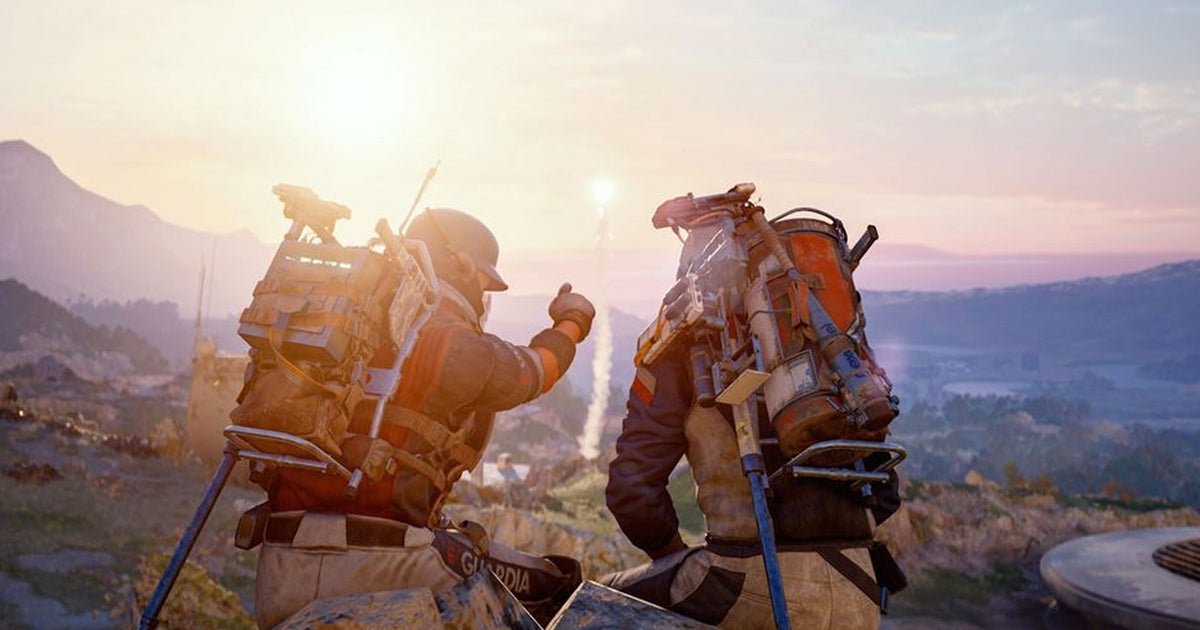
Arc Raiders developer Embark Studios is bowing to the pacifists and trialing a PvE mode in their extraction shooter. If you play between October 13th and 20th, you’ll be able to flick a toggle that means you load either into the traditional world of Arc Raiders, where human players vie for the valuable scraps left behind in a ruined world watched over by killer robots, or a slightly safer version where the machines are still deadly but the humans can’t hurt you.
“We’re seeing a large and growing group of Raiders who come to the Rust Belt for the co-op and the ARC, not fighting with other Raiders,” Embark say in the post announcing the trial. “That group has become a core part of our community, so it’s important we learn how to support them properly rather than leave them working around the game.”
To back this up, the studio share some data they’ve collected, showing that there are now more players that play only friendly co-op and never attack other humans than the merciless pure PvP bunch. Apparently the PvP group has remained at a stable 34% since the game’s launch, but the number of mixed players, who spend most their time being affable members of the post-apocalypse society but occasionally dabble in wanton homicide, has shrunk, with most opting to become full-time peaceniks.
Paulina Borsook saw there was something rotten afoot in Silicon Valley in the 1990s, and in her book Cyberselfish: A Critical Romp through the Terribly Libertarian Culture of High Tech, she set out to document and understand a peculiar mindset she saw emerging. Originally published in 2000, Paulina’s observations in Cyberselfish have proved truer now than when it was first written. She saw that the culture of high tech was determinedly anti-government, even as it owed its growth to government subsidization. That tech prioritized the idea of progress and profits and ignored all costs. That it co-opted the language of evolution to make human decisions and power structures seem inevitable. That the industry was hyper-male and tended toward hyper-misogynistic. That its figureheads possessed great wealth but were abysmal at sharing that wealth through philanthropy.
Cyberselfish was published into a moment in which tech and its leaders’ reputations were immaculate and unquestioned. Now we know better. Thanks to a surge of interest in her prophetic insights, Cyberselfish will be reissued this fall to a world that’s finally ready to listen. The following is an excerpt from the new edition.

When we were hired by the United Electrical Workers to spearhead the union drive at Twitter, it seemed the tech industry might finally be bending to progressive pressure. It was early in 2022, a year after the historic Capitol attacks of January 6, which saw Donald Trump call on his nearly eighty-eight million Twitter followers in an attempt to overturn his electoral defeat to Joe Biden. More and more public outrage was being directed at the tools that had enabled the president to mobilize his supporters. And Twitter, after deleting a series of Trump’s incendiary posts, had taken the most extreme measure of all the major social media platforms by issuing a permanent ban on the sitting president’s account.
Many outside the industry attributed the decision to Silicon Valley’s then-progressive values—management taking a principled stand against an overt attack on democracy—but in reality, it was almost entirely worker-driven. Jack Dorsey, Twitter’s founder and then-CEO, initially hesitated to take action after the Capitol attack. He said to staff that the company was not “the government,” and it was the responsibility of elected officials—not a private platform—to “do the work to right this and bring the country together.” Twitter’s employees, feeling complicit in enabling Trump’s insurrection, pushed management for decisive action. Two days after the sitting president’s self-coup attempt, hundreds of workers delivered an open letter to their employer that demanded Trump’s permanent suspension. “As Trump’s megaphone,” the letter declared, “we helped fuel the deadly events of January 6th.” That internal revolt proved decisive. Twitter’s leadership caved and permanently removed Trump from the platform.
Emboldened by their success and fueled by a newfound sense of solidarity, the group of employees who penned the letter decided to launch a union drive to codify their collective leverage and ensure the platform would never enable events like January 6 again. They had helped safeguard democracy before. This time, they were determined to win it for themselves—and we, joining their drive as dedicated staff, were determined to help them. Clarissa had helped win one of the first tech unions at Kickstarter. JS, meanwhile, had organized graduate students at MIT. By bringing our experience as organizers to Twitter’s campaign, we hoped we could harness the nascent movement’s energy and steer it with some established labor tactics. We knew we were in for a challenge—but we could never have anticipated how quickly the tech elite would dig up the ground from underneath us.




Some Samsung smart fridges stopped working on Tuesday due to a firmware update.
Korean outlets were the first to report the problems, which affect Samsung’s Bespoke AI line of fridges. Star News Korea, per a Google-provided translation, said that most of the affected devices were four-door fridges from 2024 or later.
Affected fridges “suddenly lost power and stopped functioning immediately after” trying to issue a firmware update through SmartThings, Samsung’s smart home platform, per Star News Korea. The SmartThings app then showed the devices as offline. Some users said that their fridge’s internal display was stuck showing the message “Checking SmartThings app during update.”
There are numerous reports on Samsung’s Korean community forum detailing the problem. Some users claim that they have owned their affected fridge for just a year or less.
“[T]he refrigeration and refrigeration functions themselves did not work normally, so all the food in the refrigerator had to be disposed of,” one user wrote, per a translation.

Throughout my Apes journey, I kept coming back to this not-so-odd thought: that Christopher Nolan must be a big fan of these movies. The time travel shenanigans fit to a T, and chunks of the first film’s opening act feel right out of Interstellar. It’s also the themes at play: man’s inhumanity to man, the unintended consequences of actions played out across time, and the moral weight of choice. There are also moments, like this one about nuclear weapons in Beneath the Planet of the Apes, that had me recreating the Leo Pointing Meme:
It was back in the mid-‘00s that Christopher Nolan got himself attached to direct Troy, the film that would eventually be directed by Wolfgang Peterson to not much acclaim. “As part of that process I had to work out how I wanted to treat the Trojan Horse,” Nolan told Thomas Duke in an interview on TikTok. “I was very influenced by seeing The Planet of the Apes when I was a kid. We had the Statue of Liberty half destroyed. That idea of a fallen monument.” It was an image, an idea, that Nolan held on to for two decades. The Horse, an offering to Athena and a gift to the Trojans, serves as the foundational sin of Nolan’s The Odyssey, and its connection to the Statue of Liberty is more than superficial. “That idea of a fallen monument,” sounds simple enough, but a monument is vested with meaning, and the Statue of Liberty bears more meaning than most. At the end of Nolan’s Homer adaptation, Matt Damon’s Odysseus sails off to the Unknown West with his wife, Penelope. “Civilization will rise again,” she says, to which he replies, “A new dawn will break over the darkened world… And our mistakes will once again be forgotten.” The final images of the film are Odysseus on the steps of the Trojan temple to Athena, staring up at the Horse, destruction and fire all around. If the Trojan Horse is the Statue of Liberty, here at the end the connection feels apt. More than just an aesthetic similarity, Nolan reveals the diabolical gift to be just that, a breaking of the covenant between men and the gods that has sustained civilization. The maniacs, they blew it up.

When Croton-on-Hudson’s youngest students returned to school earlier this month, a familiar — and increasingly controversial — classroom tool was missing from their desks: iPads.
A new districtwide policy prohibits the devices in kindergarten through second grade with few exceptions. Instead, teachers are emphasizing traditional, hands-on learning through activities like games, puzzles, and pen-and-paper assignments.
The screen-free classrooms arrived after a grassroots effort from local parents in Croton-on-Hudson, an affluent, highly educated suburban village on the Hudson River, 40 miles north of Manhattan.
Formed in July 2025, the Croton Community Collective has amassed more than 400 local members, built a network of parents who’ve tried to give their children a screen-free childhood, reshaped the school board, and secured several changes limiting the use of educational technology in instruction
It’s part of a larger push by the community, where many parents have pledged to delay giving their children smart phones. Volunteers have stocked scores of local businesses with boxes of books and magazines, so that kids have a screen-free way to pass the time while waiting for a haircut or sitting at a diner. And over 100 families have installed landlines in their homes to help children stay connected sans cell phones.
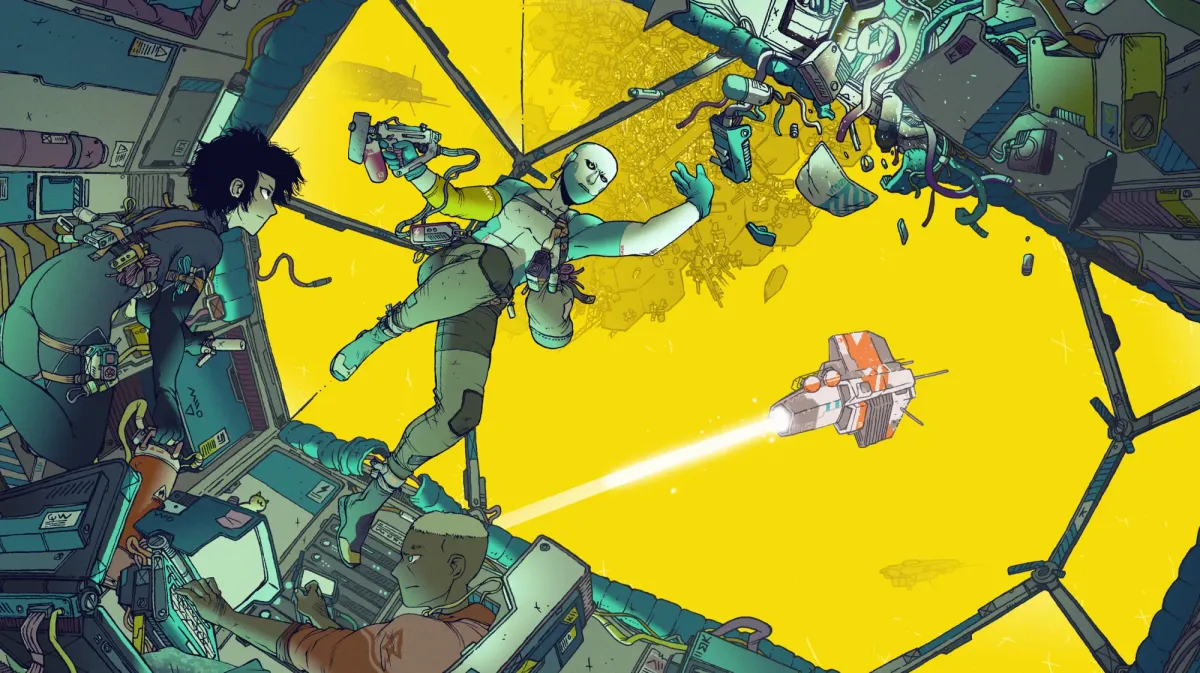
As a big tabletop project begins to come together (coming soon 👀) and I’m booking my travel for a December trip to Philadelphia to attend PAX Unplugged, I’ve had dice on the mind. Specifically, I’ve been perceiving aspects of everyday life through the lens of the dice games I can’t quite stop thinking about.
The typical Dungeons and Dragons style of dice rolling is mostly ubiquitous in culture these days:
- Your character encounters a challenge or a task they want to complete,
- You negotiate with the Game Master to determine which skill or attribute will be tested by this challenge,
- The Game Master sets a number goal commensurate with the challenge that your character must roll over to succeed
- You roll the die to determine how well you succeed or fail at your goal.
But, as they say, tabletop games have come a long way since D&D or Candyland, even if the little doo-dads we chuck across a table haven’t. What has really stood out to me, especially in the games I’m going to talk about today—Citizen Sleeper, Amberspire, and Mothership—is how the value of the dice roll is less about success or failure, and instead has deep storytelling potential.



When I wrote an unadoring review of Stephen Hawking’s final book, a collection of essays published posthumously in 2018, New Scientist suppressed some of my criticisms on the grounds that it was “too early” to voice anything other than praise for the physicist who died, aged 76, that March. It was apparently still too early in 2021, when no British publisher would touch Charles Seife’s exposé of Hawking’s bullying and self-aggrandising behaviour, Hawking Hawking.
In this new biography, veteran science writer Graham Farmelo takes a different approach. It is a comprehensive and accessible portrait of a brilliant scientist and an extraordinarily determined man who also possessed deep personal flaws to which the scientific community and the public mostly turned a blind eye. The uncomfortable but unavoidable truth is that Hawking’s overweening ambition and self-promotion, his repeated failure to acknowledge the work of others, his sexism and controlling behaviour were largely ignored because of his disability. I think it is indeed going to take us years to process that.
As this book was authorised by the Hawking family, and as Farmelo (whose superb biography of Paul Dirac, The Strangest Man, won a Costa award in 2009) is a generous and kind writer, I had feared the warts would be omitted. But instead Farmelo handles them mostly by letting others’ words speak for themselves.
Which brings us to the problematic stuff. While professional colleagues mostly spoke about Hawking with reverence and affection, it is often those closest to him who speak of another side. His father, Frank, worried that the teenaged Stephen “was developing into a selfish character … like a small boy who took everything but gave little in return”. There was evidently no love lost with his sister Mary, who called him “one of the most self-centred people I’ve ever met”. At Oxford, some friends found him rather lazy and entitled, and at Cambridge “annoyingly haughty”. His youngest son recounted how his father was “hugely competitive” and never let him or his siblings win at board games.
His unsparing ridicule of his first wife Jane’s religious beliefs contributed to their marital tensions, and the sacrifices she made often went unremarked by him. The pressure of going from lover to carer would never have been easy, but Hawking’s “authoritarian” demands and indifference to Jane’s interests added to her isolation. His adoptive brother, Edward, admitted “I’ve never really felt close to Stephen … he seems very cold.” And his mother, Isobel, complained how he would ignore people when it suited him. “I suppose what in other people would just be bad manners is excusable great-mannishness in him,” she wrote bitterly in her diary.
Hawking was scandalously bad at giving due scientific credit to others, a trait evident from the outset when he failed to indicate his debt to Penrose. Worse was his treatment of physicist Jacob Bekenstein, whose idea about the connection between the area and the entropy of a black hole he mercilessly derided before discovering for himself that Bekenstein was right – and then essentially claiming the idea as his own, which Farmelo says “disappointed some of Stephen’s friends”. Hawking could clearly be a supportive and kind adviser to his own students, but when one discovered an argument for why Hawking was wrong about a conjecture concerning black holes, he tried to get him dismissed from the Cambridge PhD programme.
We really, really need to talk about venture capital. Because it’s not “venture capital” anymore.
There’s a huge disconnect between what most people think of VC, where an investor has a big fund and cuts checks to help a founder build a company, and the current reality, where a handful of billionaire extremists use the cover of “VC” to advance an outrageous agenda where they’re accountable to no one.
I’m gonna explain this from a standpoint that almost never gets articulated: I’ve personally raised tens of millions of dollars in venture capital funding as CEO of startups, and been directly involved as a board member or advisor in raising hundreds of millions more. I’ve sat in board rooms, across the table from the people I’m talking about here, or been at the industry events that they frequent. So this isn’t sour grapes because these VCs wouldn’t cut me a check, or some chip on my shoulder about these investors due to a business deal. This is what I know about these bad actors because I’m part of the community of creators and inventors who build the things that they used to invest in — back when they still cared about innovation.
Many of the trends in society and politics that people are most angry about, from data centers being forced down everyone’s throats, to all of our favorite apps and services being enshittified, to politicians being paid to ignore the will of the people, are all being supercharged by these cancer capitalists. They have warped the structure of venture capital into a form of oligarchy that answers to no market, no regulators, and no voters. So it’s worth understanding exactly how they did it.
We knew this day would come.
Some of us have known for decades, have been writing and pontificating about this since Ken Jennings lost at Jeopardy and Kasparov lost at chess. The writing was on the wall, and now the writing is everywhere. Literally. Artificial Intelligence is writing about as well as humans — at least well enough to cause confusion and speculation — and that’s creating an existential crisis among authors, confusion among readers, and legal action within the industry.
Which takes me back to my statement about lucky windows. We had less than 20 years of writing being hard and publishing being easy, and we will never get that window back. Ever.
I’ve always felt bad for authors who lived and worked before 2007. The choices unavailable to them made life harder than it needed to be. Getting their work out into the world was brutal. After KDP, that brutality became a choice, not a necessity.
I now feel awful for anyone who wants to tell a story post-2026. You will forever be doubted. If you love an em dash the way I do, or you like flowy run-on sentences like I do, if you grew up reading Proust to let the words flow over you in all their glory, if you memorized sonnets so the iambic pentameter would soak into your bones, you’re gonna sound like a fucking bot.
Less than 20 years. More like 10, honestly. You can argue that 2014-ish was when self-publishing became legit and 2024-ish was when the tools made AI writing viable. A decade where it was easy in the ways it should be and hard in the ways it should be. That’s insane. Ten years across the one-hundred-thousand years of language.

I wrote my first horror novel, The Return, at twenty-eight. The original flicker of an idea was: what if The Shining took place somewhere uber-kitschy like The Madonna Inn. From there, the book surprised me. It became about the things that kept me up at night—primarily, my anxiety around my friendships and how they were unfolding in my twenties. I feared losing my friends, I feared my own aimlessness, my dismal finances, my inability to trust myself. Those fears seeped into the writing. It was a thrilling, cathartic experience. Horror allows you to be messy and mean, to be raw and ugly, things I never felt permitted to be in my everyday life. From there, I went on to write six more novels that all dealt with some facet of my anxiety, my angst.
Over the last several years, I’ve found immense solace in the genre (and Lexapro! I’d be remiss not to mention the Lexapro). As a scaredy-cat latecomer to horror, immersing myself fully in it has been the greatest adventure. I discovered the bloody fun adrenaline rush of slashers when I read Clown in a Cornfield by Adam Cesare and Cirque Berserk by Jessica Guess. The delicious, righteous anger in The Year of the Witching by Alexis Henderson and Such a Pretty Smile by Kristi DeMeester. I fell in love with finding random movies on Shudder on a Friday night, going to genre film festivals like the Telluride Horror Show and Anomaly in my beloved Rochester, eating popcorn for dinner and hiding my eyes behind buttery fingers during gory scenes. Discovering new horror through podcasts like Books in the Freezer and She Wore Black and Talking Scared.
The joy and release I’ve found in horror—in writing it, in consuming it—is tangible. It’s real. It’s so redeeming as someone who always worries the worst is going to happen to see that, yeah, sometimes it does! What of it? That sucks! Deal with it! As someone who feels pressure to be pretty and polite, it’s freeing to see validity in being loud and vicious. Horror provides an escape from the harsh realities of the world with something harsher, a needed reminder that we might not have it so bad. Oh, you’re grumpy on the phone with the pharmacy trying to sort out a prescription, Rachel? You could be getting possessed by an ancient demon. How about that? There’s true value there, in that perspective, in participating in these exercises of extreme circumstance. We metabolize the art we engage with; it becomes part of us and informs how we move through the world.
The author of a nonfiction book about the effects of artificial intelligence on truth acknowledged on Monday that he had included numerous made-up or misattributed quotes concocted by A.I.
The author, Steven Rosenbaum, whose book “The Future of Truth” was released this month to great fanfare, incorporated more than a half-dozen misattributed or fake quotes in sections of the book reviewed by The New York Times.
The Times asked Mr. Rosenbaum about the quotes on Sunday and Monday. On Monday night, Mr. Rosenbaum acknowledged in a statement that the book had “a handful of improperly attributed or synthetic quotes” and said that he had started his own investigation.
He said that the inclusion of the incorrect quotes was an accident and that he had “no intention of fabricating any viewpoints” while writing the book.
By naming their new book The Technological Republic, Palantir executives Alexander Karp and Nicholas W. Zamiska gesture toward this heritage. The book comes at a unique juncture in Silicon Valley’s history. Its leaders have awoken to their status as a distinct social elite but remain uncertain as to what obligations that status carries. Their old “Californian Ideology,” half libertarian fantasy and half globalist prophecy, has collapsed. What creed will take its place is not clear.3 Few seem better placed to address these questions than Karp, a founder known as much for intellectual ambition as for entrepreneurial success. While leading a defense tech company, with close ties to the sitting administration, he and Zamiska are perfectly positioned to lay out a new civic philosophy for America’s technological elite.
Readers hoping for such a book, however, will be disappointed. The Technological Republic is not a serious exploration of the political foundations of technology, nor a study of the technological foundations of American power. It is not a sober forecast of technological trends or a reckoning with their implications for the American public. It is not even a business history of Palantir itself. The Technological Republic aims at something “substantial and ambitious,” inhabiting “the interstitial but we hope rich space between political, business, and academic treatises.”4 It reads like a collection of TED Talks. Its chapters are discrete and disconnected. The themes that tie them together are nowhere explicitly laid out but must be inferred by the reader.
The most persistent of these themes is a critique of Silicon Valley’s “engineering elite.” Karp and Zamiska insist that the fortunes and fame of this elite were not created ex nihilo. This class is, in fact, deeply indebted to the civilization that made their firms possible, one that most of them feel no kinship with or obligation to. At the center of that civilization is the United States. The American nation should demand the loyalty of those who prosper most from it. This loyalty should be freely given. Karp and Zamiska believe that tech leaders should focus their substantial talents on bettering this nation. Like Palantir, their firms should not shy away from the provision of public goods. Silicon Valley should boldly take part in the “articulation of the national project.”5 Alas, the instinct of the Silicon Valley founder is to move as the market lists. How does the market list? Toward “lifestyle technologies” whose main purpose is to “enable the highly educated . . . to feel as if they have more income than they do.” America’s engineering elite is brilliant, but their brilliance is wasted on baubles.6
These observations may be accurate, but the goal of The Technological Republic is to inspire American technologists to become American techno-nationalists. Regrettably, Karp and Zamiska offer no roadmap for accomplishing this. The two men invoke the technologists of generations past as archetypes the modern engineering elite might aspire to, but they do not investigate the religious, social, political, or economic milieu that created these technologists. This is unfortunate: Karp and Zamiska’s sermonizing is not sufficient to make patriots out of a generation of engineers who have never been trained to think of themselves as stewards of a state. Elevating Silicon Valley’s engineering elite into a governing class would require much more: institutions, alliances, and traditions that root the wealth and expertise of our technologists in service to the nation.
The United States has had such a class in the past. They were the architects of the Second Industrial Revolution: engineers, industrialists, and entrepreneurs who believed that a technological revolution was needed to propel America toward greatness. They were, in this sense, America’s first governing class of techno-nationalists. In the mid-twentieth century, Americans would label their descendants the “Eastern Establishment.” This class did not materialize out of thin air. Examining their origins, and the reasons for their seventy-year dominance of American business and government, provides a useful corrective to Karp and Zamiska’s fragmented thinking and hazy wishcasting.