

A new water tower in Turkey: $3 million. Upgrades for a museum in Stamford: $400,000. A first responders appreciation barbecue in Medina County: $10,000.
These are just some of the public investments data center companies have paid for across rural Texas in the past year.
According to a Texas Tribune analysis, data center companies have donated or invested more than $343 million across the Lone Star state for various community needs, including school programs, infrastructure repairs and emergency services. Much of that money has gone to the very communities that have fought against data center development and is seemingly an effort to win over public support through their bottomless bank accounts.
The Texas Tribune reviewed news releases, public meeting agendas, and interviewed local officials to understand how data centers are using their money in Texas. Because not every donation is made public, the total — the first of its kind compiled in Texas — is likely an undercount.

Powderhorn
Freelance journalist and dirty hippie burner.
I read news so you don’t have to (but you still should).
- 12 posts
- 8 comments
Joined 3 years ago
Cake day: June 6th, 2023
You are not logged in. If you use a Fediverse account that is able to follow users, you can follow this user.

Geothermal company Fervo Energy announced Thursday morning that it had started selling electricity from its Cape Station power plant to the grid on September 30, one day ahead of schedule.
With it, Fervo becomes the first enhanced geothermal company to reach a key commercial milestone. The power plant synchronized with the grid about a week ago, bringing online the first third of what will soon become a 100-megawatt power plant.
The entire site could be much larger, though, with the potential to generate as much as 4 gigawatts of electricity, Fervo previously told TechCrunch.
“No team has ever built a project like this anywhere in the world, and we did it ahead of schedule,” Fervo co-founder and CEO Tim Latimer said in a statement.
From groundbreaking to commercial operations, the first block at Cape Station took 23 months to complete. As Fervo refines its process, it is aiming to complete future blocks in as little as 18 months.
- 4 days
I mean, that jackass move is how I found Beehaw! But the reality is, many old. users didn’t use apps in the first place. So while that was a clusterfuck, it wasn’t surgically targeted at the very people who produce the content that makes Reddit valuable. Cutting off access to old. will be the final straw for me, and I’m going to guess I’m not alone. I don’t want some cartoonish, ad-laden approximation of Reddit.

Soon, Reddit won’t let people use Old.Reddit.com unless they have used the site while logged in within the previous six months.
In July, Reddit started requiring that users be logged in to access Old Reddit. This new requirement is an effort to reduce Reddit’s biggest source of scraping and automated traffic, the company says.
Today, the social media platform announced additional upcoming restrictions on Old Reddit. A Reddit post from an employee, known as “judy-funnie” on the platform, says that “in the next few months, we’ll further limit access for logged-in users to only those who have used Old Reddit in the last six months (which covers the vast majority of all Old Reddit users).”
There is an exception for moderators, who will still be able to view Old Reddit regardless of when they last used it, as long as they are logged in.
“This helps keep Old Reddit available for the people who rely on it while reducing automated abuse,” the post says.
I’m sure it has nothing to do with old.reddit.com not having (as many? any? hard to say with uBO) ways to insert ads and manipulate the feed.
Alienating the people most likely to post and comment in a substantive way isn’t going to work out as well as they hope.
 5 days
Only a rube actually pays for pianos. Not paying is called being smart.
Wow. Pay to get more ads. That’s certainly a take. I guess people really like their stickers?
Discord has announced tools aimed at expanding the number and types of companies that advertise on the platform.
This week, the social media firm announced Discord Ads Manager, an ad campaign management platform that lets companies manage ads shown on Discord in one place. The tool can be used to perform forecasting, build “a campaign with objective-based bidding,” and monitor an ad campaign’s performance, according to the announcement.
“Self-service access extends Discord advertising to smaller studios and marketers that previously needed a direct sales relationship to run campaigns, opening the platform to advertisers, regardless of their budget,” Discord said.
The ads manager is currently available to select advertisers, but self-service access won’t come until “early 2027,” Discord said.
The company is also expanding Video Quests, video ads Discord users can watch to get in-game rewards. Discord has been showing these ads to browsers in a beta format, with limited testing on Discord’s mobile apps. The company announced that the ad format is now called Video Quests Reserve and will serve as “a premium, reservation-based offering designed for high-impact brand moments.” The ads will give “advertisers a scalable, always-on way to drive outcomes, such as impressions and clicks.” Discord will offer advertisers additional objectives to track “soon.”
Just what I need. Ads for games on servers not at all about games.
- 6 days
Let’s dial back the punctuation and all-caps. If you’d like advice on specific software, I’m sure people will be happy to oblige. But SOLVE MY PROBLEM!!! is not the best way to convey that.

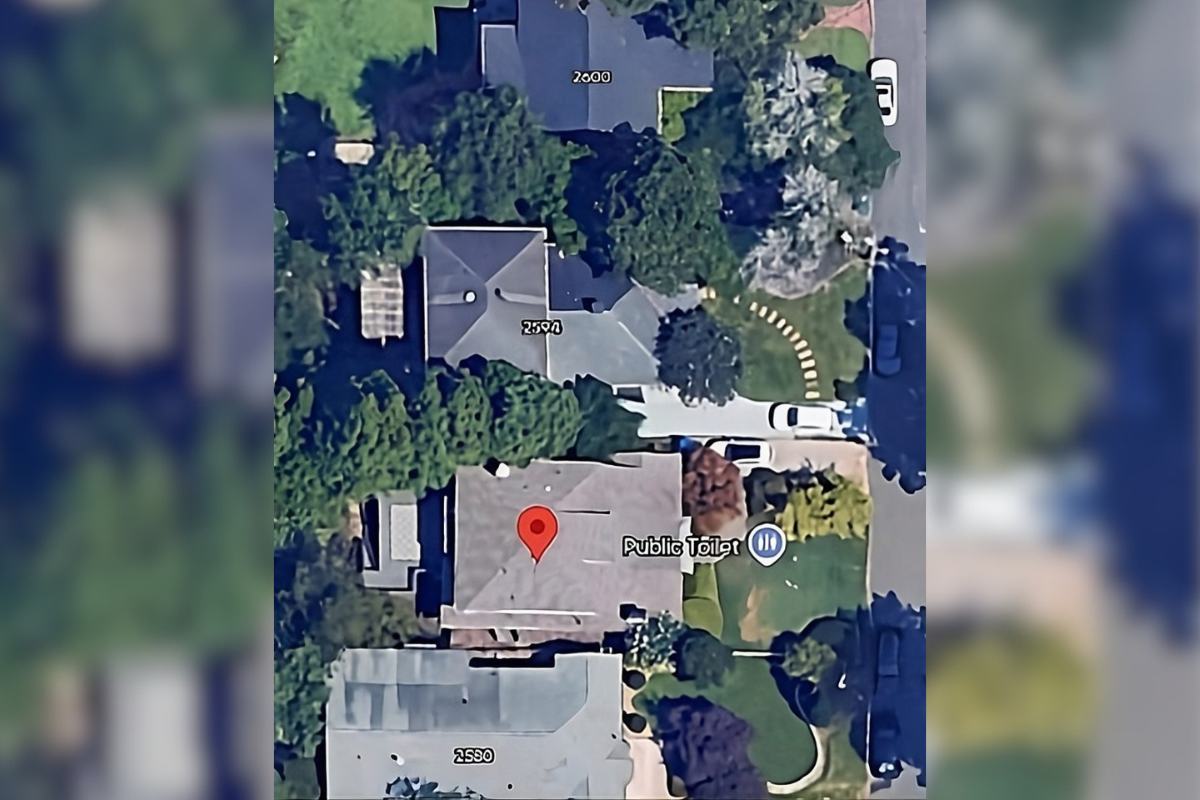
Garrett Langley, chief executive of Flock Safety, a company whose automated licence plate reader cameras track vehicle movements across thousands of American communities, is now the subject of a different kind of online scrutiny. Internet users reportedly flagged his property as a public toilet on Google Maps.
It all started when Langley stepped into the public debate during an appearance on Fox News, where he argued that people who focus on privacy or safety alone are ‘prioritising the wrong thing’. The comments drew backlash on social media and online forums. What followed went further than typical online criticism.
Amid the privacy backlash, Langley’s reported property appeared blurred on Google Street View, according to Cybernews. Users then reportedly went a step further and marked the location on Google Maps as a public toilet. However, it is unclear whether Langley himself requested the Street View blur.
Has it not occurred to you that writers know both HTML and Markdown? This is the em-dash complaint on steroids. “My god, they’re formatting correctly” is less an indication on its own of LLM use than the low standards people now expect from writing. “We need errors or it isn’t real!”
There used to be people who fixed that for a living. We called them editors.
Firefox with uBO behind a pihole pointing to Quad9 and on a router-level VPN is sufficient for 99% of users. And the 1% know exactly who they are and will harden further.
I mean, at a certain point, you have to go with the angle of the current story. I know this is going to be a hell of a stretch, but that’s sort of like expecting any car review of a new Ford to include the founder’s anti-Semitism.

Flock Safety announced a voluntary employee separation program on Friday, offering a “generous” severance package to those who want to leave amid growing backlash against the surveillance technology company, according to an internal email shared with WIRED.
Applications for Flock’s voluntary severance program opened Friday, and employees have until October 2 to decide whether to leave the company. Flock expects to grant buyouts to the majority of workers who apply, according to the email. People familiar with the program but not authorized to discuss it publicly say they believe that a significant number of the startup’s roughly 1,500 employees may try to depart.
Flock is making the severance offers as it continues to lose customers amid growing frustration across the US about its sprawling network of license plate readers, which have raised concerns about privacy and misuse. In the last month, WIRED has documented officers allegedly abusing Flock to track former romantic partners and colleagues, exposed how widely some agencies share access to the system, shown how little is known about the manufacturing of the devices, and revealed in new detail how much information Flock’s cameras collect based on data from a dismantled Flock device.
I’m not excited about how meandering that hed is, but it sets the mood for a very long piece.
In September 2024, an entrepreneur named Justin Brown uploaded a YouTube video in which he argued that writers should be “scared right now” about the rise of AI.
“I think that one of the big dangers is that AI is going to take many people’s jobs,” Brown muses to the camera as he hikes through a national park in Australia. “This includes writers, by the way.”
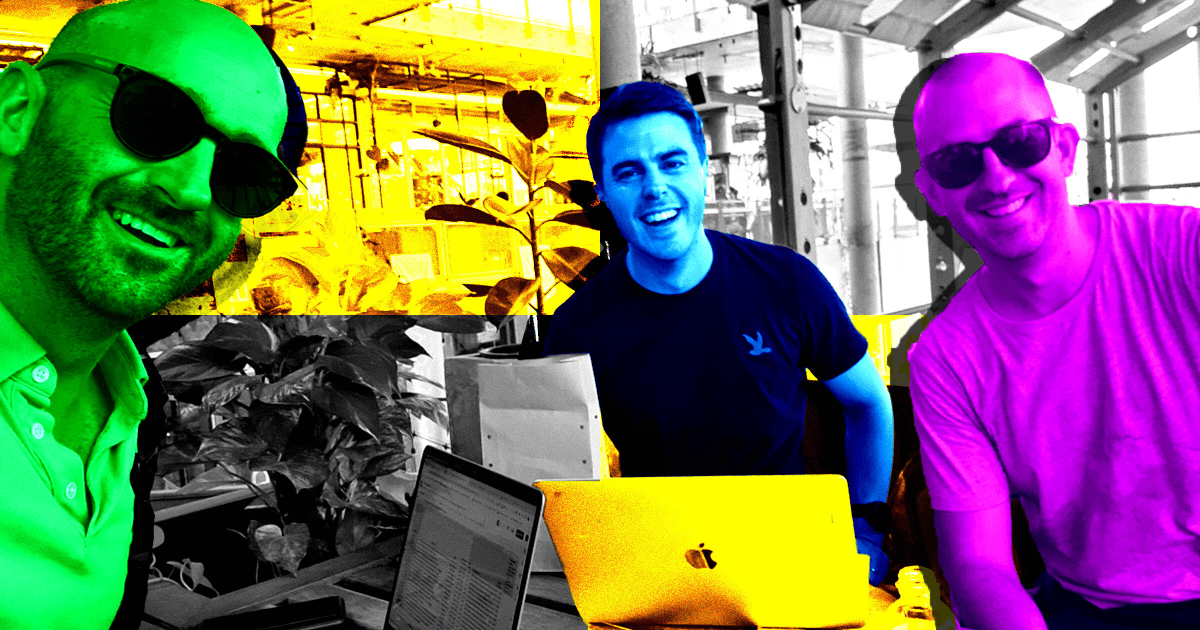
What Justin didn’t mention in the video is that, along with his brothers Lachlan Brown and Brendan Brown, he runs a company called Brown Brothers Media — which, former insiders assure us, had just months earlier fired a stunning proportion of its own writers as it embraced generative AI.
Over the past few years, BBM has pioneered a remarkably cynical business model. First it buys online publications that have established themselves as offering a distinctive type of journalism, like coverage of space travel, parenting advice, or business news. Then it floods their websites with dizzying torrents of AI-generated content — many thousands of articles per month, by our count — in a bid to soak up as many readers as possible via Google and other platforms.
There are signs that this strategy has been extraordinarily successful, with BBM boasting in 2025 that its network of sites had surpassed 50 million page views per month. It’s difficult to verify a site’s traffic without access to its internal data, but the analytics service Similarweb corroborates the claim that BBM is pulling in vast audiences, estimating that over the past year its network of publications has attracted an average of 64.7 million visitors per month. According to a recent ranking, that would make it one of the 30 most trafficked English-language media enterprises on the web, with a total digital readership substantially higher than that of NPR, narrowly besting CBS News and Forbes, and just slightly behind the Washington Post.

Hackers ripped down a Flock camera above a roadway, made a near-complete copy of the data stored inside it, and shared the files with 404 Media and WIRED, revealing in new detail how exactly Flock Safety’s cameras track the movements of both vehicles and people. The hackers say they are also publishing details on how they managed to obtain the software, in the hopes that other people may copy them.
The breach provides an unprecedented look inside a system that Flock has described as protected by on-device encryption. The hackers were able to copy the camera’s storage and recover an encryption key stored on the device, which unlocked videos of thousands of vehicle detections. The hackers shared the material with 404 Media and the transparency nonprofit Distributed Denial of Secrets, which shared the data with WIRED. 404 Media and WIRED then analyzed those files as part of a joint investigation.
While much of the automatic license plate reader’s most sensitive storage remained encrypted and inaccessible, the joint analysis of the recovered data shows that software running on the device explicitly detects people as well as vehicles, license plates, and bicycles. The camera can produce dozens of images of a single passing vehicle and, according to several weeks of recovered logs, generated more than a million images. Its computer-vision software also sometimes isolated bumper stickers and other graphics, including, in one case, an American flag patch on a motorcyclist’s saddlebag.


In light of Donald Trump’s attempts to rename a gulf, lakes and even states after “America”, South Park, the animated satirical program that has long skewered those in power, has announced an official name change. For its 29th season, the Comedy Central series will be known as “South America”.
“Inspired by the bravery and patriotism of Apple and Google, we are changing the name of South Park to SOUTH AMERICA,” creators Matt Stone and Trey Parker said in a statement. “We especially want to thank our parent company Paramount – a Skydance Capitulation.” The show’s parent company, Paramount Skydance, owned by Trump ally David Ellison, is poised to become one of the biggest media conglomerates in the US after the Trump administration approved its $111bn merger with Warner Bros Discovery (WBD), drawing much creative industry backlash.

Picture humanity in a boat being swept down a raging river, praying there is no Niagara Falls ahead. Or imagine standing with the pioneering physicists in 1942 before they triggered the first self-sustaining nuclear fission chain reaction beneath a Chicago stadium.
These were two of the analogies used this week by Prof Robert Trager, an expert in the nascent field of AI governance, to describe the perilous but potential-filled moment the world stands at with accelerating artificial intelligence.
Trager, the director of the Oxford Martin AI Governance Initiative, was speaking in the week OpenAI claimed the technology had crossed the threshold known as AGI – artificial general intelligence – with its newest model, GPT-6 Astra.
That claim came as the company prepared for a potential $850bn (£630bn) stock flotation, so included a dose of marketing spin, but if true it may be significant. The San Francisco company defines AGI as “autonomous systems that outperform humans at most economically valuable work”.
The tasks it claims Astra can automate include designing circuit boards, filling out tax returns, building video games, financial modelling, engineering design and helping assemble legal documents. The threat to some white-collar jobs is implicit.
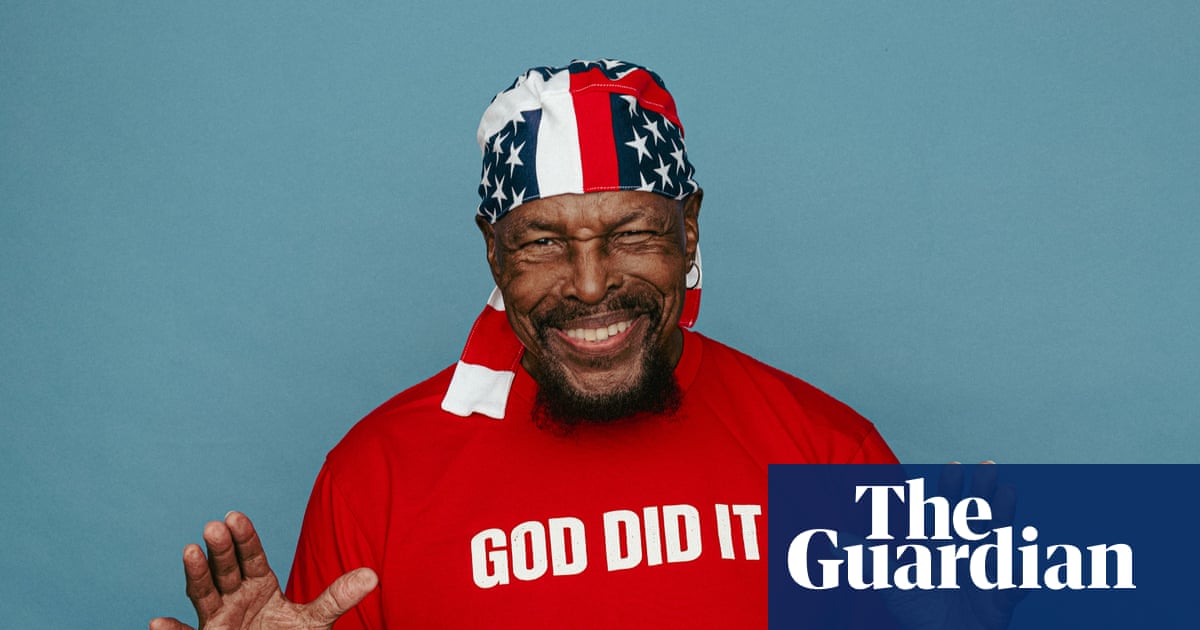
Mr T explains why he’s late, but he wants to make one thing clear – this is not an apology. “You caught me in my devotion, and nothing comes before God. So I won’t say I apologise for the delay. I just want you to know that God comes first in all my life. For allowing my success, I give God the glory.”
He is here to discuss a new Netflix documentary, Untold Mr T: I Pity the Fool. At 74, he rarely gives interviews. But when Mr T decides to talk, he really does talk. What Mr T thinks, Mr T says. And I’ve never heard anyone trash the very thing they’re here to promote quite like Mr T does today.
The actor, former wrestler and cultural icon is full of surprises. Perhaps the most surprising is that he’s still famous. As he says, he has no right to be. It’s more than 32 years since he participated in a wrestling match. Thirty-five years since he had a significant acting role in a TV show. Thirty-nine years since he starred as BA Baracus in The A-Team, and 44 years since Rocky III – the only TV show and movie he’s really remembered for. And yet, somehow, he’s still a household name.
In the 80s, many boys and girls wanted to grow up to be Mr T. The A-Team was shown all over the world. This action-adventure TV series about four US army special forces commandos turned mercenaries became a huge hit and helped define the era.
The movie star George Peppard was supposed to be the show’s headliner. But much to Peppard’s chagrin, Mr T proved far more popular. His BA (Bosco Albert or Bad Attitude, take your pick) Baracus was a mechanical genius and problem-solver; a peerless brawler and human battering ram, who wore an African Mandinka-style haircut, rattled with gold chains and had a pain threshold second to none. In some ways, BA Baracus and Mr T were similar. In others, they couldn’t have been more different.
Aug 26 (Reuters) - Tim Curry, the baritone-voiced British actor who pranced to movie fame as a singing, lingerie-clad “sweet transvestite” in the 1975 cult classic “The Rocky Horror Picture Show,” has died at the age of 80, Variety and other outlets reported.
A cause of death was not immediately given, but Curry had been in ill health for some time.
Curry appeared in numerous movies, often as a hammy villain, was nominated three times for a Tony Award for Broadway roles, and performed voice work in many animated films and TV shows.
But his best-known role was Dr. Frank N. Furter, which came in his debut film, the outrageous, crowd-pleasing horror-comedy-musical “The Rocky Horror Picture Show,” co-starring Susan Sarandon and Barry Bostwick.
EGS is essentially using fracking techniques to make deep, hot rock more porous to turn water into steam more efficiently. In this case, they likely have former O&G people on staff for whom waiting 23 months from first drill to production is actually glacial.